
The Silent Price of Modern Habits: Young Adults and TMJ Disorders
Mouth breathing, tech neck, broken sleep, mewing and gym clenching — the everyday habits quietly driving TMD in young adults.
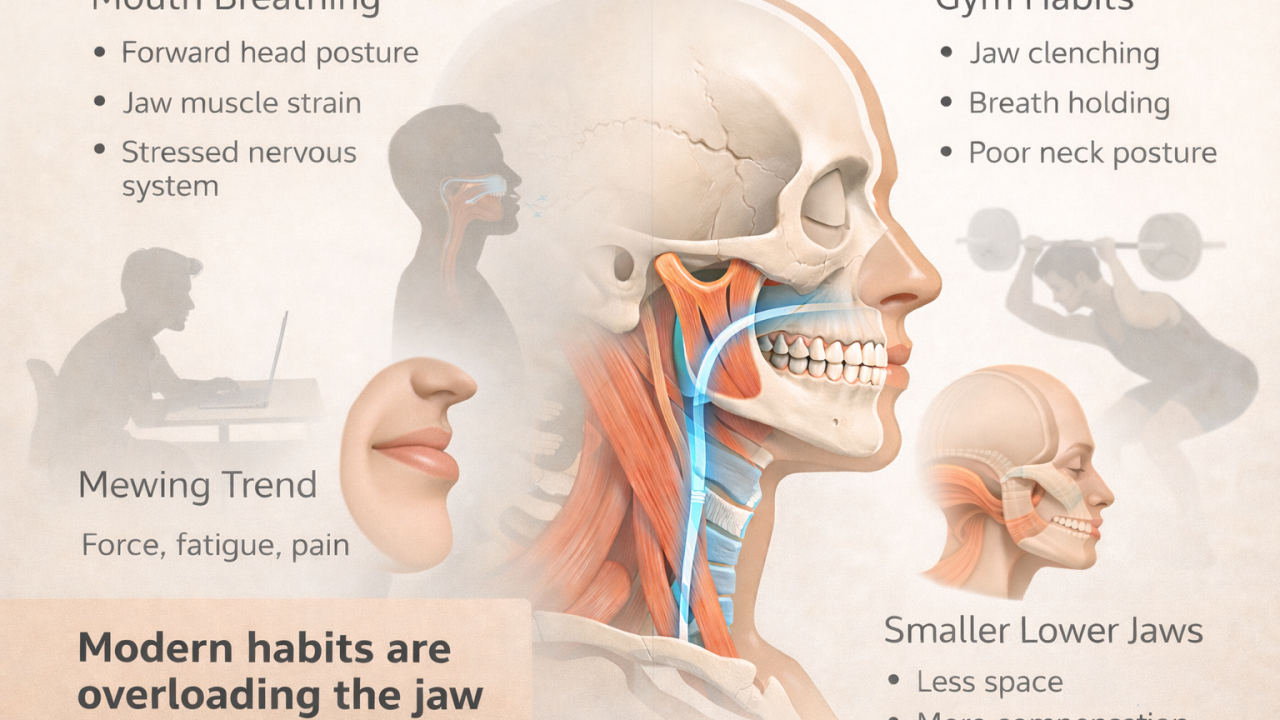
In clinics across the world, more young adults are presenting with jaw pain, headaches, facial tightness, and clicking joints — classic features of temporomandibular disorders (TMD). While structural and genetic factors matter, a large part of this trend can be traced back to everyday behaviours that have quietly become "normal" in the modern lifestyle.
Instead of a single culprit, TMD in young adults often emerges from a cluster of habits: chronic mouth breathing, digital-era cervical posture, sleep deprivation, and high-intensity clenching during workouts, layered on a background of stress and anxiety.
Mouth breathing, airway, and TMJ load
Chronic mouth breathing, especially from childhood and adolescence, is strongly associated with altered craniofacial growth, mandibular retrusion, and airway narrowing. These changes disturb the balance of the temporomandibular system and are frequently accompanied by TMJ pain, noise, and functional limitation.
Experimental and clinical data show that mouth breathing can modify condylar development and joint remodeling, predisposing the TMJ to overload even before symptoms appear. As the mandible rotates downward and backward and lips lose their seal, the neuromuscular system often compensates with increased elevator muscle activity and parafunctions, further stressing the joint.
Tech neck: cervical posture and jaw mechanics
Modern screen culture has normalised a forward-head, rounded-shoulder posture that shifts the cranium anteriorly relative to the spine. This posture disrupts the normal relationship between the cervical spine, hyoid, and mandible, increasing strain in neck and jaw musculature and contributing to TMD symptoms over time.
Poor posture is now recognised as a modifiable risk factor for TMD, alongside habits such as chewing pens, taking oversized bites, and using teeth as tools. When airway compromise is present, many young adults unconsciously project the head forward to breathe more easily, further linking posture, airway, and TMJ stress in a vicious cycle.
Sleep, stress, and the 24/7 jaw
Sleep disruption is not just a brain issue; it is a jaw issue. Poor sleep quality, symptoms of obstructive sleep apnea, and high perceived stress are all independently associated with increased TMD risk.
Sleep bruxism — rhythmic or sustained clenching and grinding during sleep — is considered an important risk factor for painful, muscle-related TMD. Young adults with bruxism frequently report higher stress, anxiety, and use of substances like caffeine and nicotine, which amplify sympathetic arousal and perpetuate nocturnal jaw activity.
Mewing, gym clenching, and performance culture
Social media trends such as "mewing" encourage continuous tongue and jaw posturing in pursuit of aesthetic facial changes. While correct tongue posture has a role in normal orofacial function, exaggerated, forceful, or obsessive attempts to hold the jaw and tongue in unnatural positions may contribute to muscle fatigue, trigger points, and joint irritation in susceptible individuals.
Similarly, many young adults unconsciously brace and clench their teeth under heavy loads in the gym. Studies on athletes show that teeth clenching can increase masticatory muscle activity and enhance strength and joint fixation in remote body regions, explaining why it "feels" powerful during lifts. However, frequent high-intensity clenching increases tension and rigidity in the elevator muscles and has prompted calls to consider mouthguard use to protect teeth and joints during resistance training.
From risk to resilience: practical takeaways
For clinicians and health-conscious young adults, the focus needs to shift from treating "TMJ pain" in isolation to recognising these interconnected behavioural drivers. Small, sustained changes can reduce risk and improve function:
- Restoring nasal breathing and addressing airway issues early.
- Coaching neutral cervical posture and ergonomic screen habits.
- Protecting sleep with consistent routines and managing stress loads.
- Educating about healthy tongue posture versus forceful, constant "mewing."
- Using appropriate mouthguards and discouraging maximal clenching during every gym set.
"Temporomandibular disorders rarely appear out of nowhere in a healthy system; they are usually the end result of adaptive mechanisms pushed beyond their capacity."
Modern behaviour patterns are rewriting how young jaws grow, function, and fail — and recognising this trend early is the first step toward changing the trajectory.
Keep reading
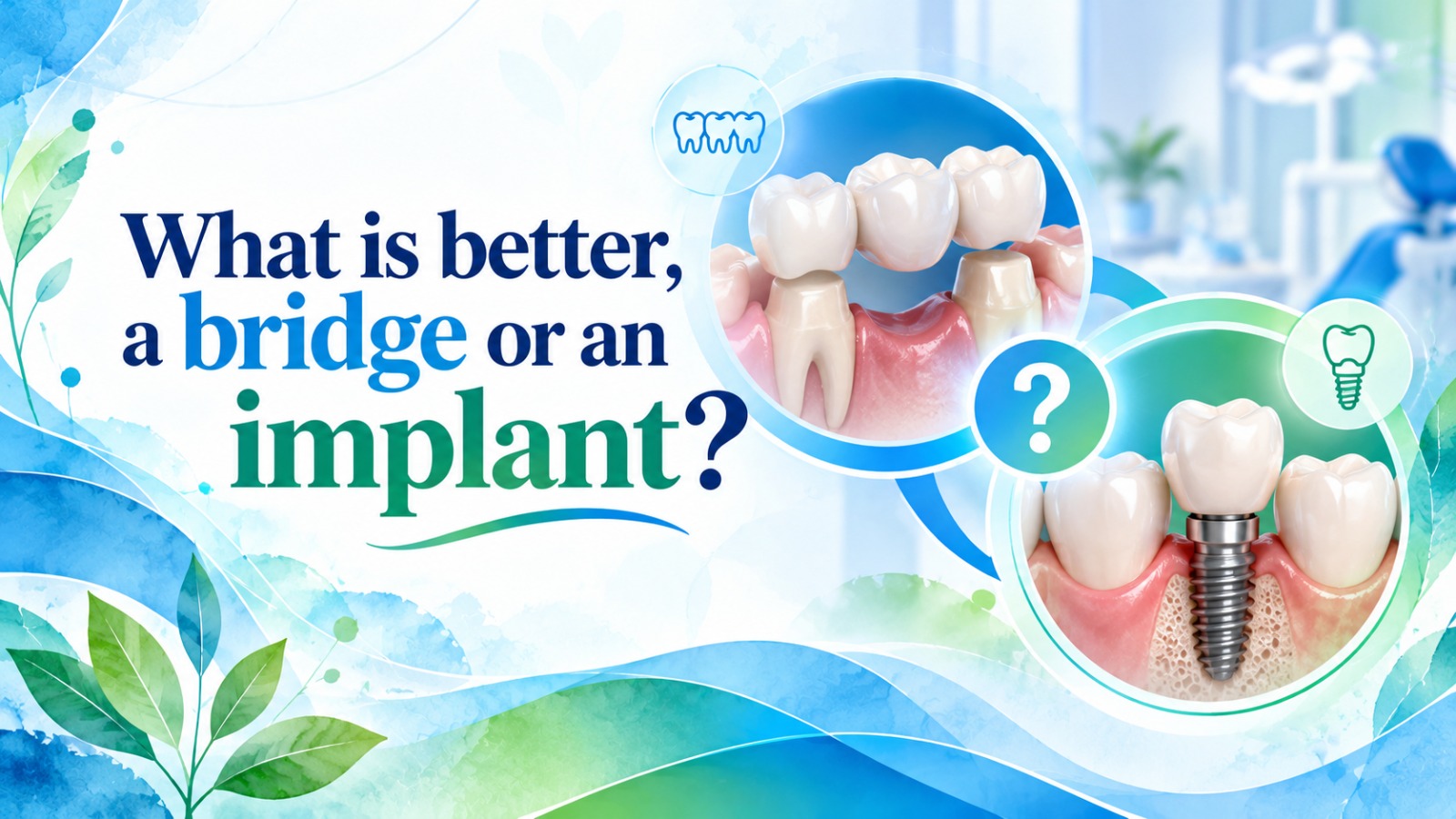
Dental Bridge or Implant: Which Option Fits Your Situation?
Neither a bridge nor an implant is automatically better. How neighbouring teeth, bone, treatment time and maintenance should shape your choice.
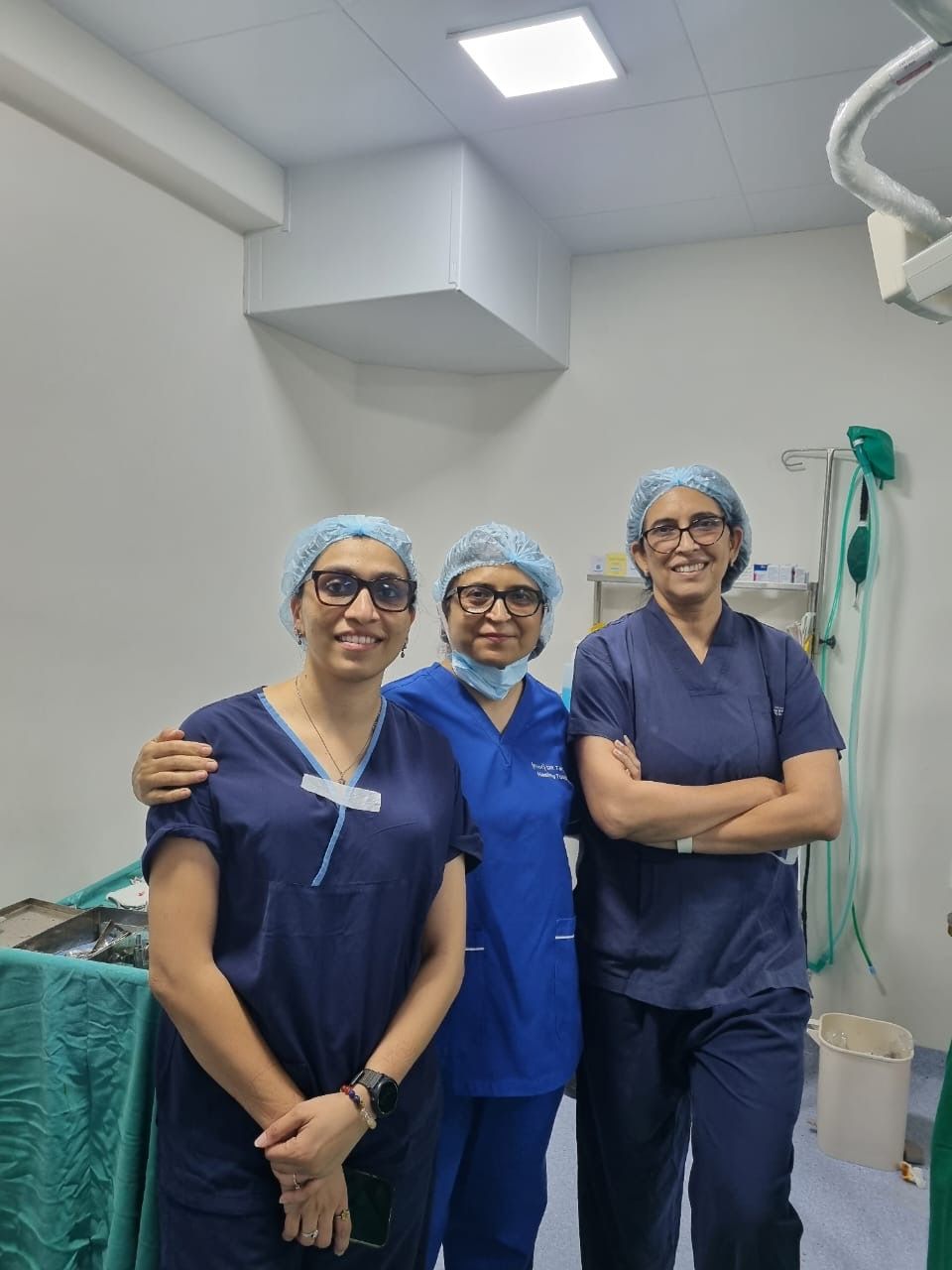
Women in Surgery
From a changing room that did not exist to an all-women surgical team — how the role of women in oral and maxillofacial surgery has changed in one career.