
Faith, Meaning, and the Jaw: What Pain Science Is Quietly Teaching Us About TMD Outcomes
Belief systems act as neuroregulatory inputs. What fMRI research on faith, meaning and pain modulation means for TMD care.
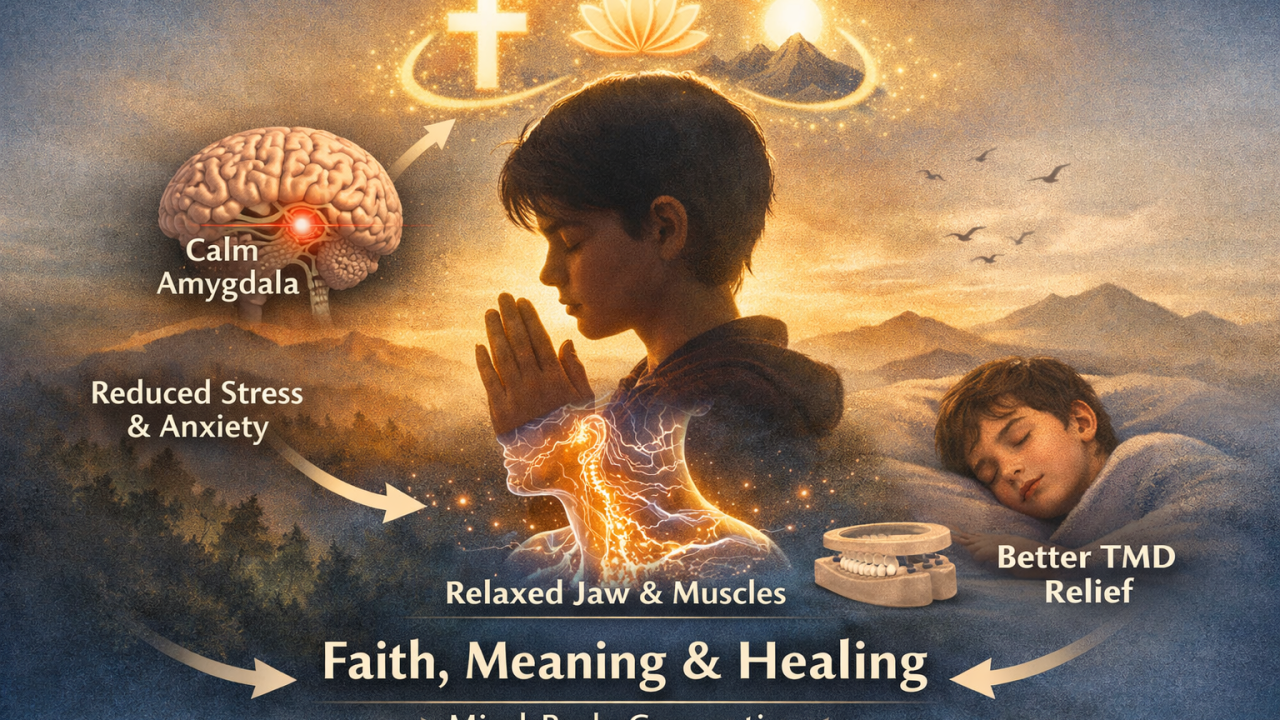
A young Gen Z patient once said to me during a TMD consultation: "My jaw hurts the most on days when my mind won't switch off." Clinically, that sentence is more revealing than any scan.
Temporomandibular disorders (TMD) are no longer understood as isolated joint or muscle problems. Contemporary pain science places them firmly within a biopsychosocial framework, where neural threat processing, emotional regulation, and behavioral patterns influence symptom severity and recovery trajectories.
At the center of this system sits the amygdala-driven threat network — a neural circuit deeply involved in pain amplification, muscle guarding, sleep disruption, and hypervigilance.
What is less discussed — but increasingly supported by data — is how belief systems, spirituality, and meaning-making interact with this network and influence pain outcomes.
The neurobiology of pain is also the neurobiology of meaning
Chronic pain is not merely a signal from tissues; it is an interpretation by the brain. Central sensitization — well documented in chronic TMD — occurs when pain-processing circuits remain in a prolonged state of threat. This phenomenon has been demonstrated across musculoskeletal and orofacial pain populations.
Studies show that emotional states such as fear, anxiety, and catastrophizing significantly lower pain thresholds and worsen functional outcomes in TMD patients. Conversely, states associated with perceived safety and emotional regulation reduce pain intensity and improve coping.
Here is where belief systems enter — not as ideology, but as neuroregulatory inputs.
What clinical research shows about faith and pain
Functional neuroimaging studies have demonstrated that religious belief and prayer can modulate pain perception. In a landmark fMRI study by Wiech et al., religious participants exposed to painful stimuli reported significantly reduced pain intensity when viewing religious imagery compared to neutral imagery. Neuroimaging revealed increased activation in prefrontal regulatory regions involved in top-down pain control, with concurrent dampening of pain-processing circuits.
Other studies have shown that prayer and spiritual coping can engage the periaqueductal gray (PAG) — a key brainstem center involved in endogenous analgesia and threat modulation. Importantly, these effects were not observed in non-believers under identical conditions, highlighting that belief itself — not suggestion alone — plays a role in pain regulation.
However, the literature is equally clear on the nuance:
- Active spiritual coping (trust, meaning, agency) is associated with better pain tolerance and emotional adjustment.
- Passive or fatalistic coping ("nothing can be done, I must endure") correlates with poorer outcomes, higher disability, and greater distress.
This distinction matters clinically.
Believers vs non-believers: what the data really suggests
The question often asked — sometimes defensively — is whether believers "do better" than non-believers in pain management. The honest answer from current evidence is this:
- Believers often demonstrate enhanced pain modulation when engaging in faith-based practices that promote safety, trust, and meaning.
- Non-believers achieve comparable outcomes when they have alternative systems that fulfill the same neurobiological function — such as mindfulness, meditation, values-based frameworks, or strong community support.
In other words, the differentiator is not belief versus disbelief. It is whether the individual has access to a reliable internal mechanism that down-regulates threat and restores nervous system balance. Pain science supports this across populations.
Why this is especially relevant for Gen Z
Gen Z patients frequently present with high baseline anxiety, sleep dysregulation, cognitive overload, and hyper-monitoring of bodily sensations. These factors perpetuate amygdala activation and are strongly associated with jaw clenching, bruxism, and persistent TMD symptoms.
For many Gen Z individuals, a personal relationship with a higher power — or a structured sense of meaning — provides emotional containment, surrender of excessive control, cognitive reframing of pain, and improved stress recovery.
Clinically, this translates into better adherence to conservative TMD protocols, lower catastrophizing scores, improved tolerance to symptom fluctuations, and more stable long-term outcomes.
What this means for TMD practice (and ethics)
This does not imply introducing religion into clinical prescriptions. It means recognizing belief systems as part of the patient's psychosocial context, supporting practices that regulate the nervous system, and avoiding purely mechanical models for chronic TMD. Modern pain management already integrates psychology, sleep, and behavior. Meaning and belief simply sit within that same evidence-based ecosystem.
Closing reflection
The jaw is not just a joint. It is a barometer of safety and love. When the brain feels supported — by faith, purpose, or meaning — it loosens its grip. Muscles soften. Pain becomes manageable. Healing accelerates.
"Sometimes, better TMD outcomes are not achieved by doing more — but by feeling safer, supported, and less alone."
Selected references
- Wiech K, et al. An fMRI study measuring analgesia enhanced by religious belief. Pain.
- Tracey I, Mantyh PW. The cerebral signature for pain perception and modulation. Neuron.
- Gatchel RJ, et al. The biopsychosocial approach to chronic pain. Psychological Bulletin.
- Rippentrop AE, et al. The relationship between religion/spirituality and physical health, mental health, and pain. Journal of Behavioral Medicine.
- Vlaeyen JWS, Linton SJ. Fear-avoidance and its consequences in chronic musculoskeletal pain. Pain.
Keep reading
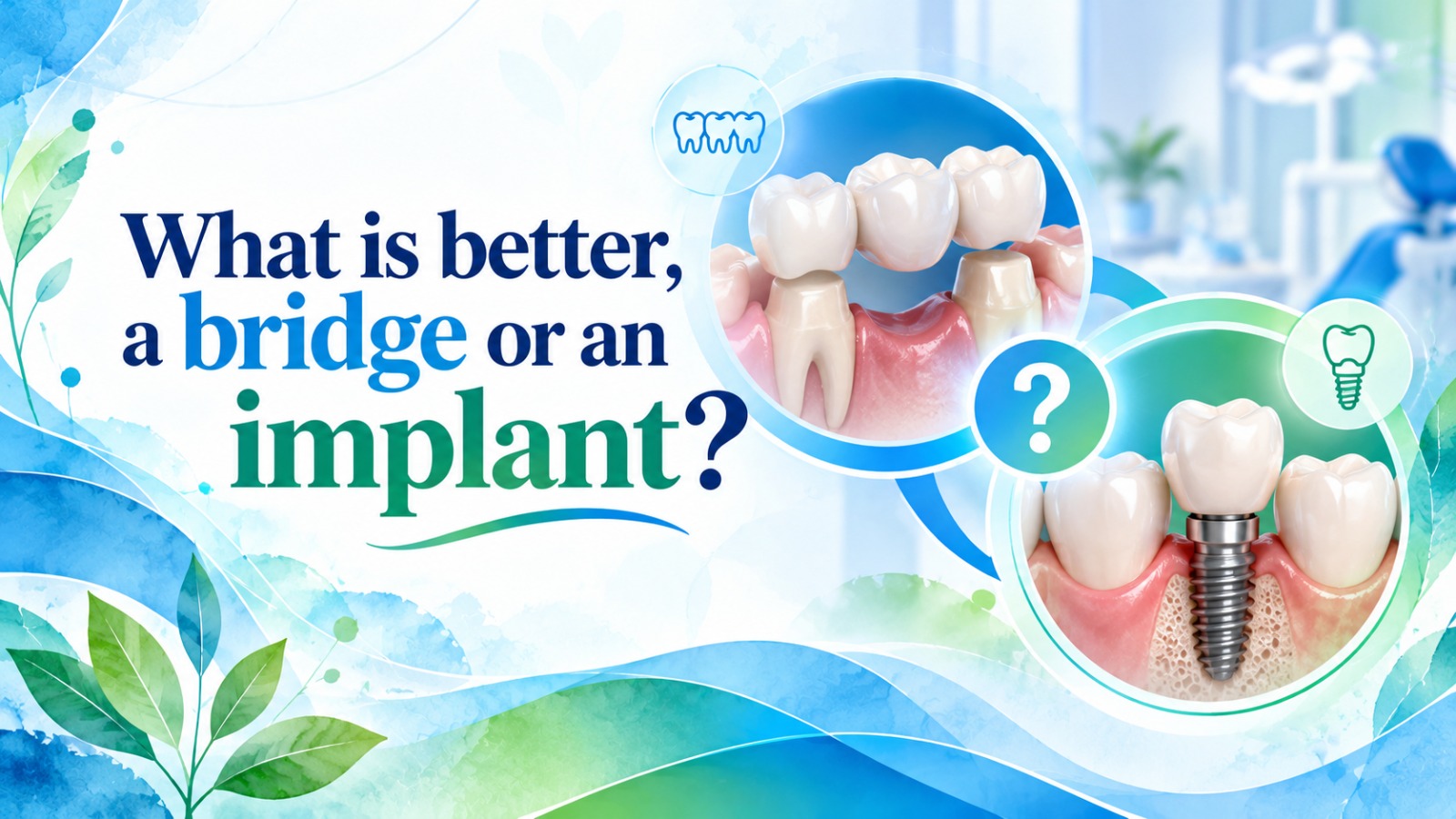
Dental Bridge or Implant: Which Option Fits Your Situation?
Neither a bridge nor an implant is automatically better. How neighbouring teeth, bone, treatment time and maintenance should shape your choice.
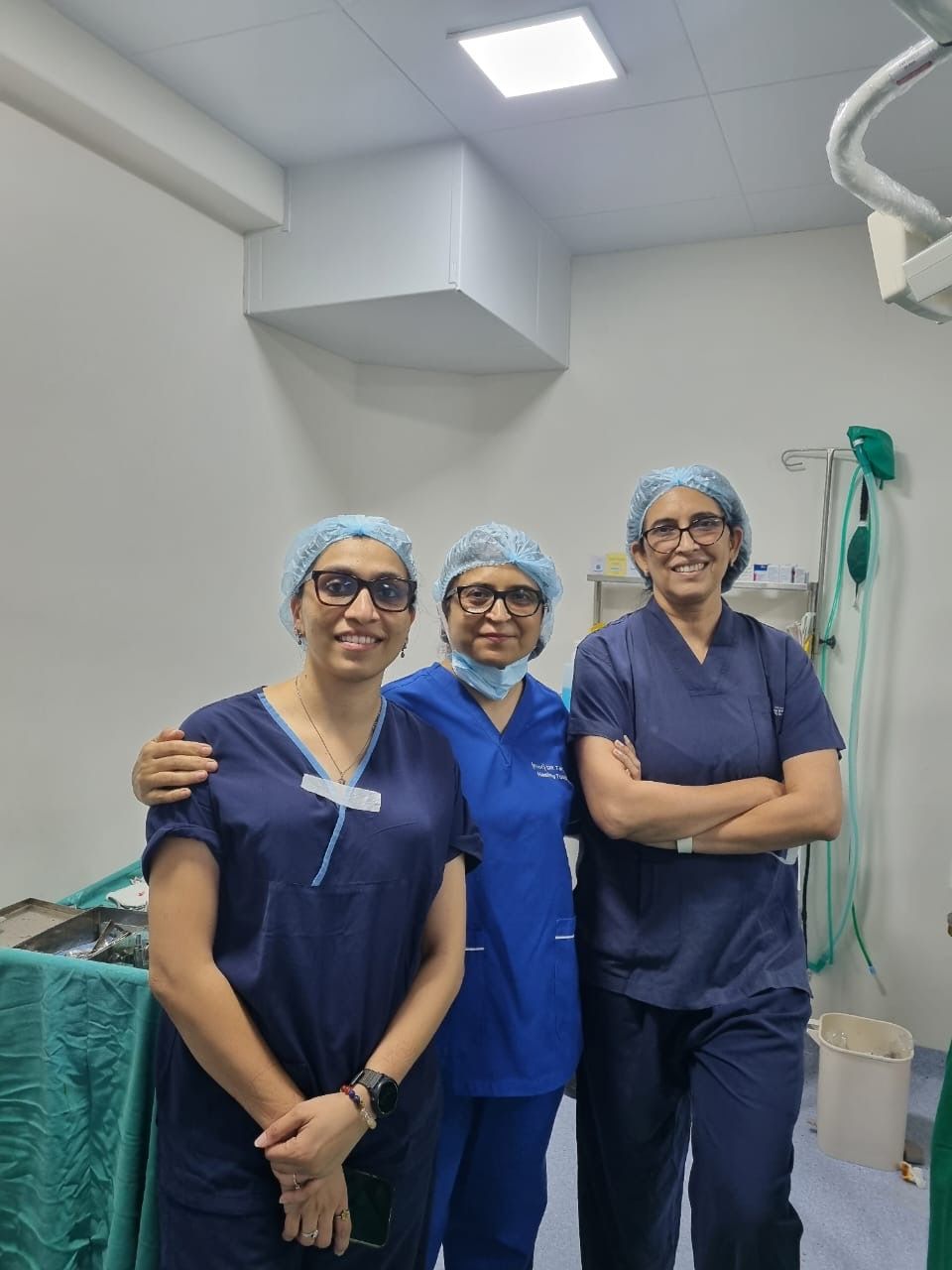
Women in Surgery
From a changing room that did not exist to an all-women surgical team — how the role of women in oral and maxillofacial surgery has changed in one career.